


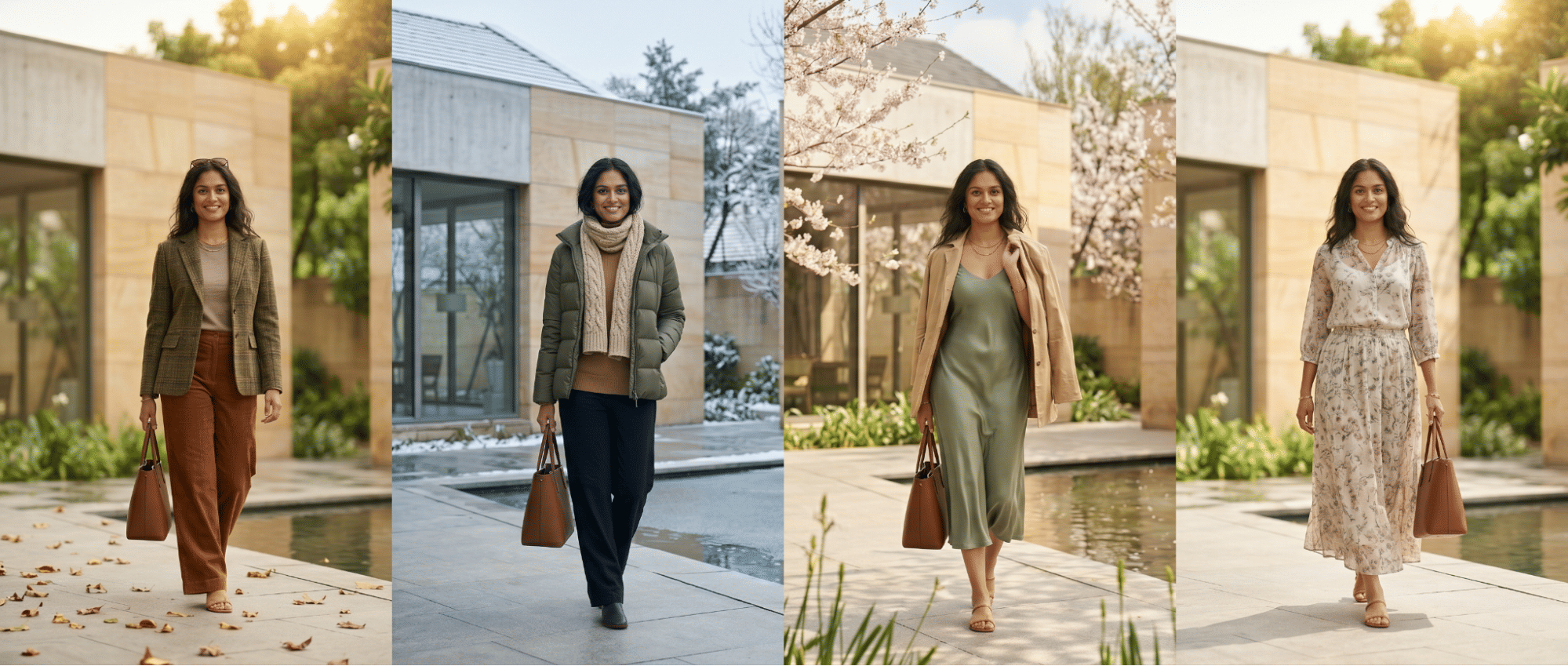
Shopping for western wear in India can feel slightly confusing.
Something that looks perfect online suddenly feels impossible to wear outside. A cute top works beautifully for brunch but feels uncomfortable during a humid commute. Heavy denim sounds like a good idea until monsoon arrives.
And honestly, Indian weather changes everything.
A wardrobe that works in Mumbai humidity may not feel the same in Delhi winters or Bangalore evenings. This is exactly why fabric often matters more than trend.
Because the best outfits are not just stylish.
They survive the weather too. If building a more wearable wardrobe feels overdue, here is a practical guide to western wear fabrics that actually work through Indian seasons.
In This Story:
- Summer Usually Calls for Breathable Fabrics
- Monsoon Dressing Needs Lighter, Faster-Drying Fabrics
- Indian Winters Usually Work Better With Smarter Layers
- In-Between Weather Usually Needs Flexible Pieces
- Fabric Labels Quietly Tell You Everything
- The Best Clothes Usually Match the Weather
- Frequently Asked Questions
Summer Usually Calls for Breathable Fabrics
Indian summers rarely believe in subtlety.
Once temperatures rise, breathable fabrics quickly become non-negotiable.
Cotton usually tops the list for a reason. It feels soft, absorbs sweat better and tends to stay more comfortable during long days outdoors.
Linen works beautifully too, especially for relaxed shirts, wide-leg trousers and oversized silhouettes. Rayon blends often feel lighter and drape nicely for dresses or tops.
Some summer-friendly western wear worth repeating:
- Cotton oversized T-shirts
- Linen trousers
- Relaxed shirt dresses
- Cotton co-ord sets
- Breathable tank tops
This is usually the season where comfort quietly starts winning over trends.
Monsoon Dressing Needs Lighter, Faster-Drying Fabrics
Monsoon wardrobes deserve more thought than they usually get.
Humidity, sudden rain and sticky weather can quickly make heavy fabrics feel uncomfortable.
Lighter materials that dry faster often work better during this season.
Rayon blends, lighter cottons and breathable polyester blends usually feel easier to manage than thick fabrics.
This is also where heavy denim sometimes becomes frustrating.
Especially when drying time suddenly matters.
For monsoon-friendly western wear, think:
- Lightweight trousers
- Relaxed shirts
- Breathable co-ords
- Easy dresses
- Quick-drying tops
The goal is usually simple.
Less heavy. Less complicated.
Indian Winters Usually Work Better With Smarter Layers
Winter dressing in India looks very different depending on where you live.
Delhi winters may ask for heavier layers, while cities like Bangalore or Hyderabad usually need lighter options.
Instead of bulky winter wear, lighter layering often makes more sense.
Think:
- Soft knit tops
- Lightweight cardigans
- Relaxed blazers
- Denim jackets
- Shackets
Cotton blends and soft knits often feel easier to repeat through Indian winters because they add warmth without feeling too heavy.
Especially for everyday dressing.
In-Between Weather Usually Needs Flexible Pieces
Then comes the weather nobody really plans for.
Slightly cool mornings. Warm afternoons. Sudden rain.
This is where layering pieces quietly become useful.
Overshirts, lightweight jackets, breathable blazers and easy cotton layers usually make everyday dressing much simpler.
Especially if your city changes temperature through the day.
Sometimes, one good layer does more than a full wardrobe change.
Fabric Labels Quietly Tell You Everything
Before buying western wear, fabric labels deserve a little more attention.
It helps to check:
- Fabric composition
- Cotton percentage
- Breathability
- Stretch level
- Whether the fabric feels lightweight or heavy
The same silhouette can feel completely different depending on fabric.
A linen shirt behaves differently from polyester. Cotton trousers feel different from heavier blends.
And honestly, this is often what decides whether something gets reworn.
The Best Clothes Usually Match the Weather
Style matters.
But comfort quietly decides what stays in rotation.
The tops, dresses and trousers people genuinely repeat are usually the ones that survive heat, humidity, unexpected rain and long days without becoming uncomfortable.
Because dressing well in Indian weather is rarely about owning more.
Usually, it is about choosing smarter.
Frequently Asked Questions
-
Which western wear fabrics work best in Indian summers
Cotton, linen and rayon blends usually feel most breathable during Indian summers, especially for oversized T-shirts, dresses and relaxed trousers.
-
What fabrics feel easiest to wear during monsoon
Lighter cottons, rayon blends and quick-drying materials often feel easier during humid or rainy weather than heavy fabrics.
-
What western wear works best for mild Indian winters
Soft knitwear, lightweight jackets, relaxed blazers and cotton-blend layers usually work well for mild winter weather in most Indian cities.
