


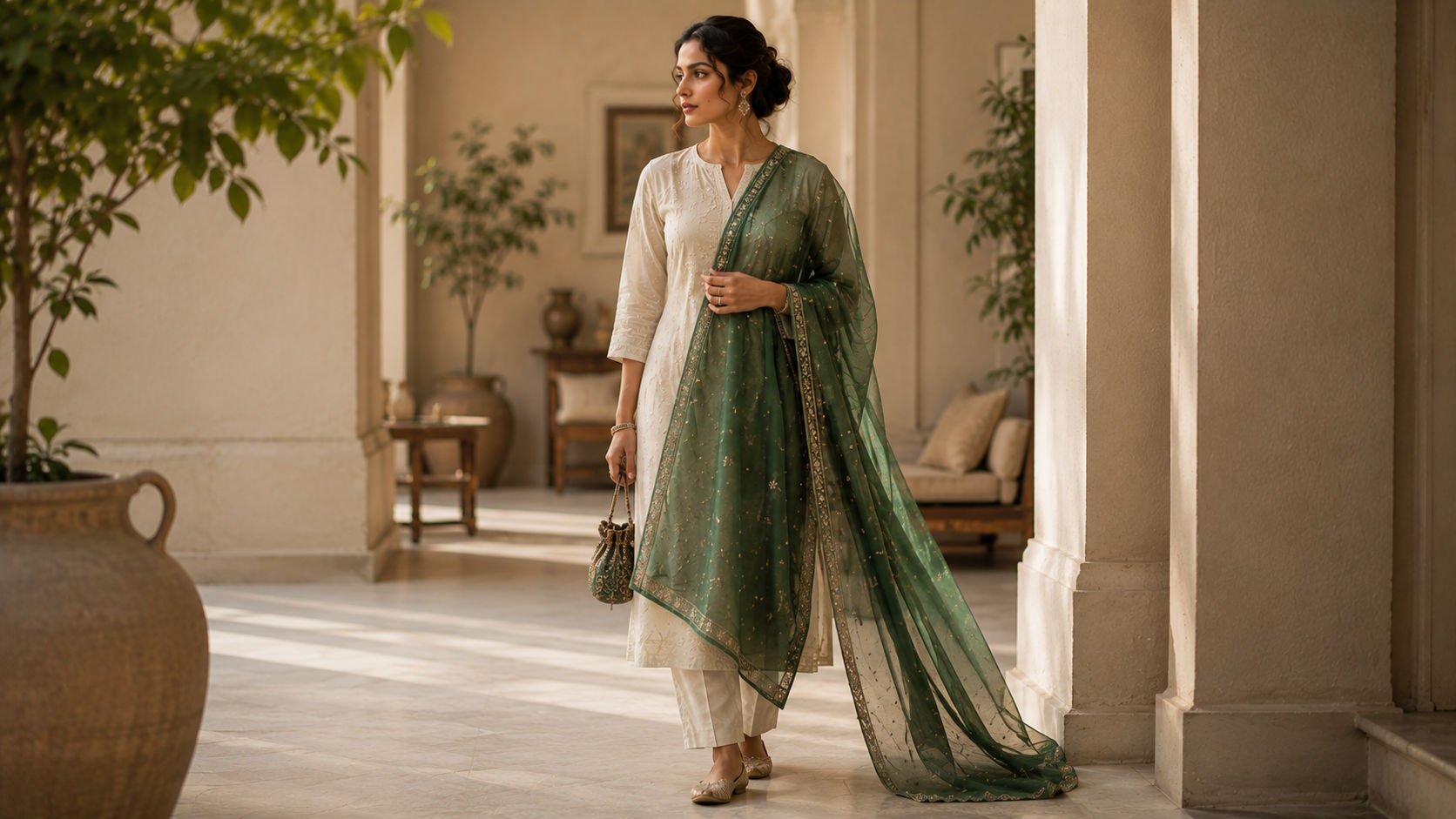
Ever worn a salwar suit that looked perfect on the hanger but felt slightly underwhelming once you put it on. More often than not, the dupatta is the reason.
It is easy to treat the dupatta as an afterthought. Most of us spend time choosing the kurta, comparing colours and checking fabrics, only to pick the first matching dupatta that comes along.
But a dupatta can completely change the personality of an outfit. The same suit can feel festive, elegant, relaxed or wedding-ready depending on what you pair it with. That is why choosing the right dupatta is less about matching and more about creating balance.
If you have ever wondered why some salwar suit combinations instantly look put together while others feel unfinished, the answer often sits right on your shoulders.
Not Every Suit Needs a Heavy Dupatta
One of the most common styling mistakes is assuming that a heavier dupatta automatically makes an outfit look better.
It does not. A heavily embroidered dupatta with an already detailed kurta can sometimes make the outfit look busy. On the other hand, a light weight chiffon or organza dupatta can add the right amount of contrast without overpowering the look.
Before choosing a dupatta, take a quick look at the suit itself. If the kurta already has embroidery, sequins or statement prints, a simpler dupatta often works better.
Sometimes Contrast Looks Better Than Matching
Matching sets will always have their place. But some of the most interesting ethnic outfits are built around contrast.
Think about a white chikankari suit paired with a bright pink dupatta. Or an ivory kurta styled with a deep emerald green drape.
The outfit instantly feels more thoughtful. This does not mean every look needs bold colours. Even subtle contrasts can make a difference.
A beige suit paired with a muted rust dupatta often feels more stylish than an exact colour match.
Fabric Changes the Mood Faster Than Colour
Most people notice colour first.
Stylists usually notice fabric.
A cotton dupatta creates a completely different look compared to an organza one, even when both are the same shade.
A few examples:
- Cotton feels easy and everyday
- Chiffon feels soft and flowy
- Organza feels dressier and structured
- Silk feels rich and occasion-ready
This is why two outfits in the same colour can still look completely different.
The fabric is doing more work than you realise.
Printed Suits and Printed Dupattas Need a Little Care
Mixing prints can look beautiful. It can also go wrong very quickly.
When the suit already has strong prints, a quieter dupatta usually creates a more balanced look. Similarly, a simple kurta gives you more freedom to experiment with printed or woven dupattas.
The goal is not to make everything match. The goal is to make everything work together.
The Occasion Usually Makes the Decision Easier
When in doubt, think about where you are wearing the outfit.
For everyday wear, lightweight cotton and printed dupattas often feel practical.
For festive gatherings, organza, silk and embroidered styles naturally create more impact.
For wedding functions, richer fabrics like Banarasi or zari-detailed dupattas can instantly elevate a simple suit.
The Dupattas People Wear Most Are Usually the Simplest Ones
Look inside most wardrobes and you will notice something interesting.
The dupattas that get worn repeatedly are rarely the heaviest ones.
They are the easy ones. The soft chiffon dupatta that works with three different kurtas. The printed cotton style that survives summer. The neutral organza piece that somehow goes with almost everything.
Versatility often wins. Especially when getting dressed in the morning.
A Good Dupatta Should Complete the Outfit, Not Compete With It
The best dupattas do not demand all the attention.
They simply make the outfit feel finished. Sometimes that means adding colour. Sometimes it means bringing texture. Sometimes it means softening a heavily detailed kurta.
The next time you shop for a salwar suit, spend a few extra minutes thinking about the dupatta.
You may find that the smallest part of the outfit ends up making the biggest difference.
Frequently Asked Questions
-
Which dupatta fabric works best for daily wear?
Cotton and lightweight chiffon dupattas are popular because they feel comfortable, breathable and easy to style regularly.
-
Can I wear a contrasting dupatta with a salwar suit?
Yes. Contrasting dupattas often add depth and interest to an outfit, especially when the suit itself is in a neutral or solid colour.
-
Should the dupatta always match the colour of the suit?
Not necessarily. Complementary colours and subtle contrasts can often create a more stylish look than an exact match.
-
What kind of dupatta works with heavily embroidered suits?
Lightweight and simpler dupattas usually pair better with heavily embroidered suits because they help keep the overall outfit balanced.
