


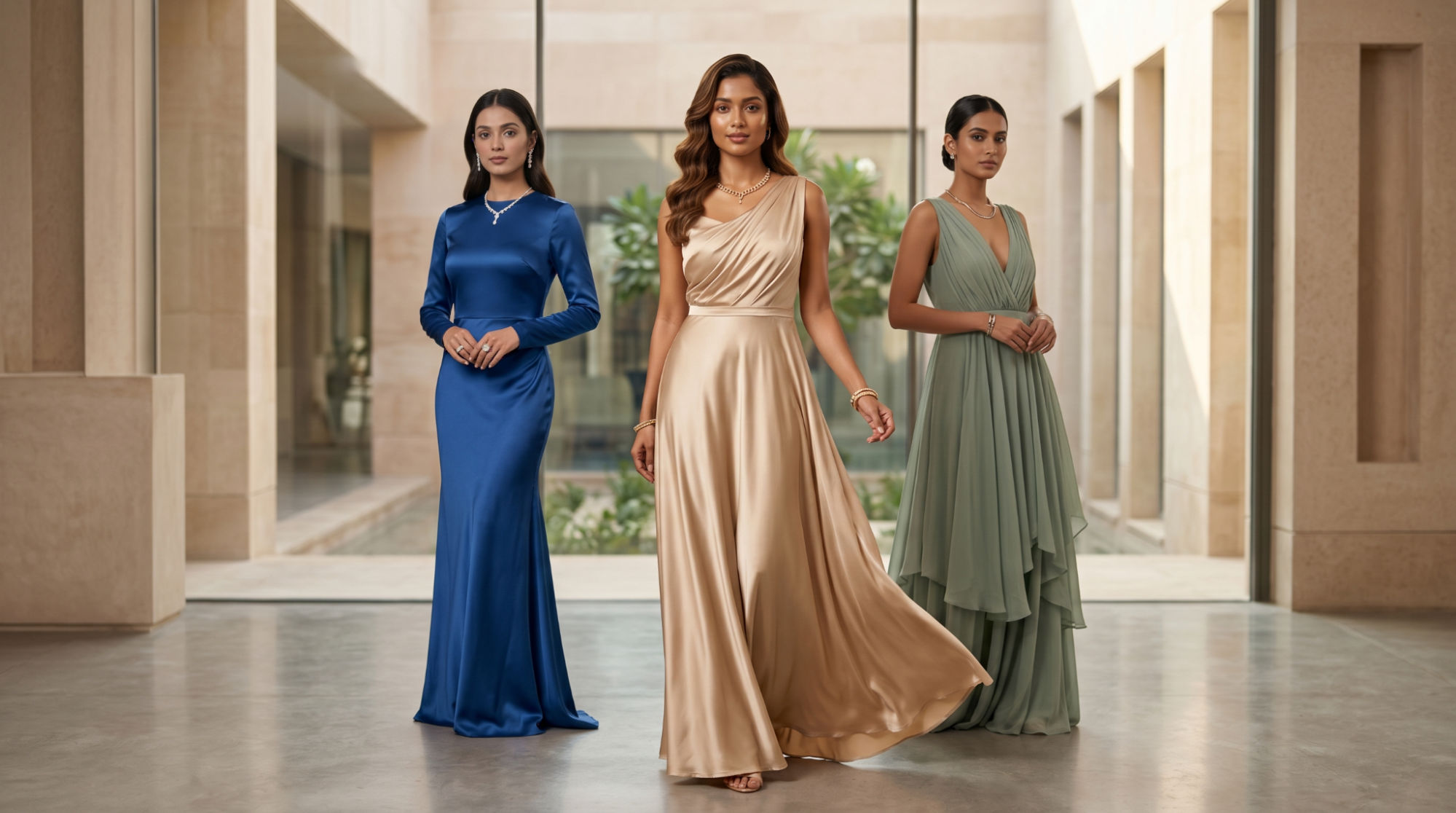
Sometimes, the gown is perfect. The fit works. The silhouette feels right. You already know where you are going to wear it. And then something feels slightly off.
More often than not, it is the colour. The same gown can look completely different depending on the shade. A deep jewel tone suddenly makes everything feel polished, while another colour that looked beautiful online somehow does not feel quite right once you try it on.
This is exactly why gown colour matters. Not because fashion comes with rules, but because certain shades naturally complement different skin tones better than others.
And honestly, finding the right colour gets much easier once you understand undertones.
In This Story:
- First, It Helps to Know Your Undertone
- Warm Undertones Often Pair Beautifully With Richer Shades
- Cooler Undertones Usually Work Well With Jewel Tones
- Neutral Undertones Usually Have More Flexibility
- The Occasion Matters Too
- Fabric Can Completely Change the Colour
- Gown Colours Worth Trying Before You Buy
- The Right Colour Usually Feels Obvious
- Frequently Asked Questions
First, It Helps to Know Your Undertone
Before choosing colours, it helps to know whether your skin leans warm, cool or neutral.
This sounds more complicated than it actually is.
A quick way to tell:
Warm Undertones
Skin with golden, yellow or slightly olive tones often falls here.
Cool Undertones
Skin with pink, rosy or bluish tones usually sits in this category.
Neutral Undertones
A mix of both. Usually the easiest category to style because many colours work naturally.
You do not need to overanalyse this.
Sometimes, the colours you naturally gravitate towards already tell you a lot.
Warm Undertones Often Pair Beautifully With Richer Shades
If warmer colours already seem to brighten your skin naturally, trust that instinct.
Champagne, rust, emerald green, warm reds, mustard, copper and earthy tones often complement warm undertones especially well.
For weddings or evening events, satin gowns in champagne or deeper greens can feel especially elegant.
The warmth in the colour tends to sit beautifully against warmer skin tones without overpowering them.
Cooler Undertones Usually Work Well With Jewel Tones
Cool undertones often pair beautifully with richer, cooler shades.
Think:
- Navy blue
- Berry tones
- Sapphire blue
- Deep wine shades
- Lavender
- Silver-grey tones
These colours often create a cleaner contrast and naturally make the overall look feel more balanced.
For evening gowns or cocktail dressing, jewel tones almost always feel elevated.
Especially under evening lighting.
Neutral Undertones Usually Have More Flexibility
If your undertone sits somewhere in the middle, you probably already know this.
A lot of colours work.
Soft pastels, jewel tones, classic black, champagne, blush pink, olive and richer earthy shades can all feel wearable depending on the occasion.
This often makes shopping easier.
The decision becomes more about mood than limitations.
Sometimes, the event decides the colour as much as the undertone.
The Occasion Matters Too
The same gown colour may feel completely different depending on where you are wearing it.
For weddings and festive events:
- Emerald green
- Wine shades
- Champagne tones
- Rich jewel colours
For cocktail evenings:
- Black
- Navy
- Satin neutrals
- Deep reds
For daytime celebrations:
- Soft pinks
- Powder blue
- Sage green
- Softer pastels
The setting quietly changes how colour feels.
Fabric Can Completely Change the Colour
This part surprises people.
The same shade can look completely different depending on fabric.
A satin emerald gown often feels richer because light reflects differently. Chiffon softens colour. Velvet tends to deepen it.
This is why trying colours in different fabrics sometimes changes everything.
The shade is the same.
The mood is not.
Gown Colours Worth Trying Before You Buy
If you are unsure where to start, these shades tend to work beautifully across different occasions:
- Emerald green
- Champagne gold
- Navy blue
- Deep wine
- Black
- Dusty pink
- Sage green
Classic colours usually stay easier to repeat too.
Especially for gowns you want to wear more than once.
The Right Colour Usually Feels Obvious
Sometimes, finding the right gown colour is less about rules and more about noticing how something makes you feel.
Certain shades instantly brighten the face. Others somehow make the whole outfit feel more balanced.
And usually, you know the difference the moment you try it on.
Frequently Asked Questions
-
Which gown colours work best for warm undertones
Champagne, emerald, rust, copper, mustard and warmer reds often complement warm undertones beautifully, especially for occasion wear.
-
Do jewel tones suit cool undertones
Yes. Navy, berry shades, sapphire blue and deep wine tones often pair especially well with cooler undertones.
-
Does fabric affect how gown colour looks
Yes. Satin tends to reflect light and appear richer, while chiffon softens colour and velvet often creates a deeper finish.
